
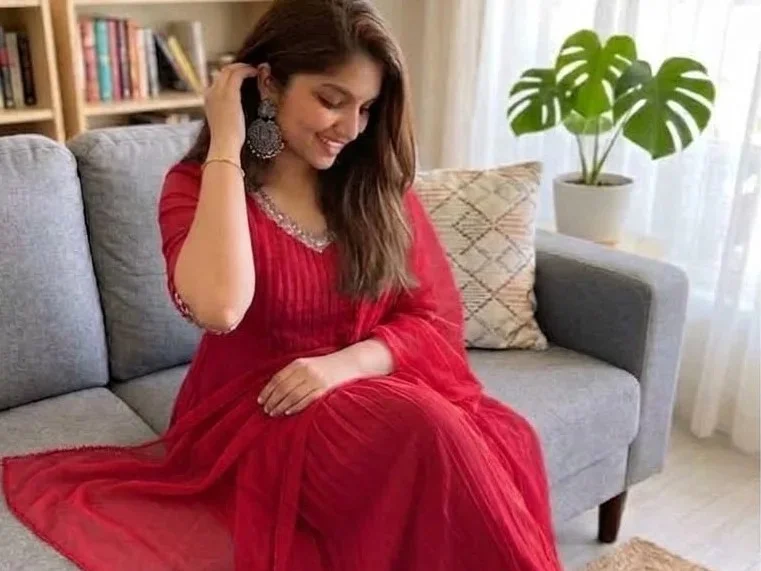
Here is the short answer. A salwar kameez is a three-piece outfit: a kameez (a long tunic), a salwar (trousers) and a dupatta (a long scarf). The styles differ mainly in the cut of the kameez and the shape of the trousers. For most events in the UK, a georgette or chanderi anarkali covers weddings and parties, while a cotton or crushed tissue suit set covers everyday wear, temple visits and office ethnic days. Indian sizes run smaller than high-street sizes, so check the size chart before you order.
The pieces
- Kameez: the tunic. It can be hip-length, knee-length or floor-length, straight or flared.
- Salwar: loose trousers that gather at the ankle. Many sets now come with straight pants or palazzos instead.
- Dupatta: a long scarf in chiffon, organza or net, worn over one shoulder, across both shoulders or draped over the head at a temple or gurdwara.
The main styles
Straight-cut suit
A knee-length kameez with straight pants or a salwar. The easiest to wear all day, and the default for work and casual family events.
Anarkali
A fitted bodice that flares out into a long, full skirt, often panel-cut so it swirls when you move. It is the most formal salwar style and the usual choice for wedding guests and receptions.
Palazzo set
A kameez worn over wide-legged palazzo trousers. Comfortable, modern and good for long evenings on your feet.
Churidar
Close-fitting trousers that bunch in folds at the ankle, usually worn with a longer kameez. A churidar is a type of salwar kameez, not a separate outfit.
Pleated suits
Pintuck or pleated kameez designs add texture without heavy embroidery. They suit day functions and smaller celebrations.
Fabrics and when to wear them
- Georgette: flowing and light, with a soft drape. Parties, sangeets and receptions.
- Chanderi: a light fabric with a subtle sheen. Day weddings, pujas and festivals.
- Crushed tissue: a shimmery, textured finish. Festive dinners and Diwali.
- Velvet or a velvet yoke: warmer and richer. Good for a British winter evening.
- Cotton: breathable and easy to wash. Everyday wear, temple visits and long journeys.
What to wear for the occasion
- Wedding guest: a floor-length anarkali in georgette or chanderi, with a contrasting organza dupatta.
- Reception or evening party: hand-worked or embellished suits, in deeper colours such as maroon, midnight blue or black.
- Diwali, Eid or a festival dinner: crushed tissue or chanderi in a bright or pastel shade.
- Temple, gurdwara or puja: cotton or chanderi, with a dupatta long enough to cover your head.
- Office ethnic day: a straight-cut or palazzo set that is easy to sit in at a desk.
How to choose your size
Indian sizes are cut smaller than high-street sizes, so most people size up. Measure your bust, waist and hips and compare them with the chart on the product page, not with the label in your other clothes. Our Indian clothing size guide explains the conversion. Our suits are mostly stocked in M to XXL, with some in S and 3XL. If you are between two sizes, choose the larger one, because a tailor can take a kameez in more easily than let it out.
Quick answers
What is the difference between a salwar kameez and a churidar?
A churidar is a style of salwar kameez. The difference is the trousers: a salwar is loose and gathered at the ankle, while churidar trousers are fitted and bunch in folds at the ankle.
Is an anarkali a salwar kameez?
Yes. An anarkali is a salwar kameez with a long, flared kameez. It is worn with fitted trousers or a churidar and a dupatta.
How do I wear the dupatta?
The simplest way is pleated and pinned on the left shoulder. For a formal look, drape it across both shoulders. At a temple or gurdwara, wear it loosely over your head.
Shop salwar suits
Browse salwar suits and anarkalis from £22.99 to £54.99, and our anarkali collection. Prices are in your currency and we deliver across the UK.
You can request a size exchange within 7 days of delivery if the item is unworn, with its tags attached. You pay the return postage. See our exchange policy for details.